
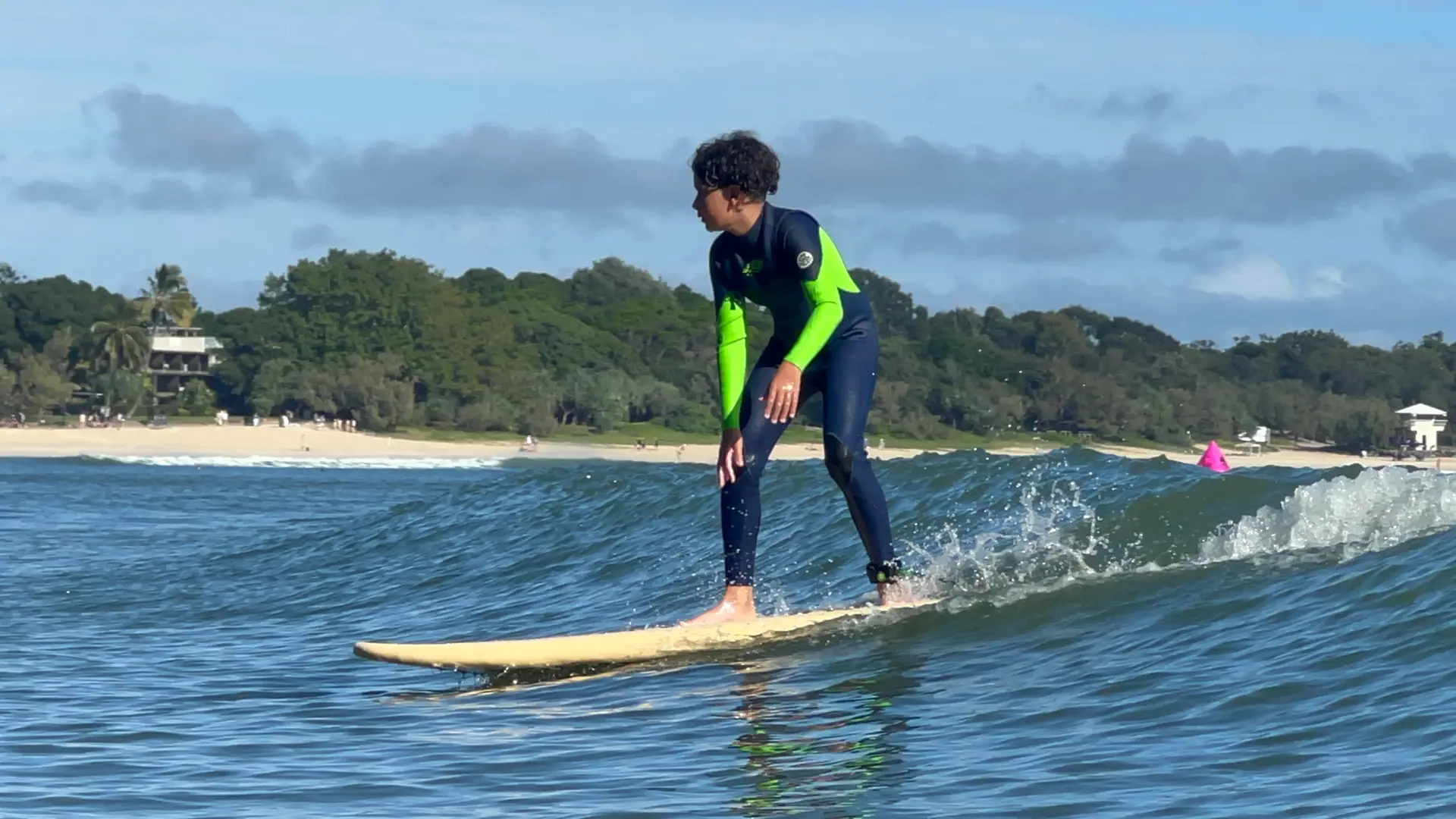
Starting your surfing journey is exciting, but choosing the right equipment can feel overwhelming. Walk into any surf shop and you’ll find hundreds of boards in different shapes, sizes, and constructions.
The good news? As a beginner, you don’t need to understand every technical detail. What matters most is choosing equipment that helps you catch more waves, build confidence, and progress faster.
In this beginner surfboard guide, we’ll explain surfboard anatomy, surfboard volume, board sizing, and how to choose the best surfboard for beginners.
Beginner Surfboard Guide – How To Choose Your First Surfboard
The surfboard you learn on will have a bigger impact on your progress than almost any other piece of equipment.
Many beginners make the mistake of buying a small performance board because it looks cool or resembles what professional surfers ride. Unfortunately, those boards are designed for experienced surfers and can significantly slow your progression.
A beginner-friendly board should:
- Paddle easily
- Provide stability
- Catch waves effortlessly
- Be forgiving when mistakes happen
- Build confidence in the water
The right board means more waves, more practice, and more fun.
Surfboard Anatomy Explained for Beginners
Understanding the basic anatomy of a surfboard will help you make smarter decisions when purchasing your first board.
Outline: The Overall Shape of the Surfboard
The outline refers to the overall shape of the board when viewed from above.
Traditional shortboards typically have:
- Narrow, pointed noses
- Refined rails
- Pulled-in tails
For beginners, a wider nose is generally preferable because it provides better planing and paddling efficiency, making it easier to catch waves.

Surfboard Rocker for Beginners
Rocker refers to the curve of the board from nose to tail when viewed from the side.
Generally speaking:
- Less rocker = easier paddling and more speed
- More rocker = tighter turns and increased responsiveness
As a beginner, your priority isn’t sharp turns—it’s catching waves consistently.
A board with lower rocker and moderate entry rocker at the nose helps:
- Improve paddling efficiency
- Generate speed naturally
- Reduce the risk of nose-diving during takeoff

Understanding Surfboard Tail Shapes
The tail influences how your board turns, holds, and generates lift.
Common tail shapes include:
- Squash tail
- Round tail
- Pin tail
- Swallow tail
For beginner surfers, wider tails generally work best because they:
- Provide more lift
- Improve stability
- Maintain speed in smaller waves
- Make catching waves easier
A squash tail or swallow tail is usually an excellent choice for new surfers.

Surfboard Rails Explained
Rails are the edges running along both sides of the surfboard.
The shape of the rails affects:
- Stability
- Responsiveness
- Hold on the wave face
Beginners should look for softer, boxier rails because they offer:
- Better balance
- Increased forgiveness
- Greater overall stability
More refined rails may feel responsive but are generally less forgiving for learners.
Do Beginners Need to Worry About Bottom Contours?
Not really.
Bottom contours help direct water flow beneath the board and influence performance characteristics.
However, most beginner-friendly softboards have simple bottoms, and the differences are unlikely to be noticeable during the early stages of learning.
Instead of focusing on bottom contours, prioritise:
- Length
- Volume
- Stability
- Construction quality
Best Surfboard Fin Setup for Beginners
Surfboard fins provide stability, hold, and directional control.
Popular configurations include:
- Single fin
- Twin fin
- Thruster
- Quad
For beginners, almost any fin setup will work, but the thruster configuration remains the most common and versatile choice.
When starting out, don’t overthink fins. If your board comes with fins installed, you’re ready to surf.

Surfboard Volume for Beginners: Why Foam Is Your Friend
One of the most important concepts for beginner surfers is surfboard volume.
Volume is measured in litres and indicates how much flotation a surfboard provides.
More volume means:
- Easier paddling
- Better balance
- Increased wave-catching ability
- More confidence in smaller surf
For beginner and intermediate surfers, more volume is almost always better.
How Much Surfboard Volume Do You Need?
As a simple guideline:
Complete Beginner
- Aim for approximately 1 litre of volume per kilogram of body weight.
Advanced Beginner
- Approximately 10–15% fewer litres than body weight.
For example:
- 80kg beginner = around 80L
- 80kg advanced beginner = around 68–72L
Remember: volume is only one part of the equation, but it’s a very important one.

Why a Soft Top Surfboard Is the Best Choice for Beginners
When learning to surf, the best surfboard for beginners is almost always a soft top surfboard (commonly called a foamie).
Benefits include:
1. Increased Safety
Soft tops feature foam decks and softer fins, reducing the risk of cuts, bruises, and serious injuries.
2. Better Floatation and Stability
Foamies are typically:
- Longer
- Wider
- Thicker
This makes them significantly easier to paddle and stand on.
3. Affordability
A quality foam board usually costs less than a comparable fibreglass or epoxy board.
4. Durability
Softboards are incredibly resilient and can handle the bumps, drops, and accidental impacts that come with learning.

How to Choose the Right Size Surfboard
Board size is critical for progression.
As a simple rule:
Adults
Choose a surfboard that is at least 2 feet longer than your height.
Heavier Surfers (85–90kg+)
Look for:
- Minimum 8-foot length
- Quality construction
- Stiff core design
Lighter Adults (Under 70kg)
A board between 7–8 feet is often ideal.
Teens and Smaller Adults
A 7-foot foamie generally provides a good balance between flotation and manoeuvrability.
Recommended Beginner Surfboards
Some reliable beginner-friendly options include:
- MF Softboards
- Catch Surf Odyssea Log
- Softlite Surfboards
- Soft-top models from established brands such as Pyzel and HaydenShapes
Choose the board that best matches your size, weight, and local surf conditions rather than the one with the coolest graphics.
Common Mistakes When Buying Your First Surfboard
Buying Based Only on Price
The cheapest board isn’t always the best value.
Consider:
- Durability
- Performance
- Resale value
- Longevity
Going Too Small Too Soon
Small boards:
- Paddle poorly
- Catch fewer waves
- Require better technique
A larger board accelerates learning dramatically.
Overthinking Performance Features
As a beginner, focus on:
- Length
- Volume
- Stability
- Construction quality
Don’t get distracted by advanced marketing terminology.
Final Thoughts: Volume Is Your Friend
If there’s one takeaway from this guide, it’s this:
More volume equals more waves.
The beginner who chooses a stable, high-volume foam board will almost always progress faster than the beginner who chooses a small performance board.
Focus on catching waves, building confidence, and having fun. The high-performance equipment can come later.
For now, foam is your friend.
Want To Access More Free Surfing Resources?
Visit our Free Surfing Resources page to access more free content to improve your surfing.
Or visit our YouTube channel.
Leave a Reply